
Chantilly Resident Lookup Sources
Chantilly is an unincorporated Fairfax County community, so the useful records are held by Fairfax County offices and Virginia agencies rather than a Chantilly municipal clerk. A careful resident lookup matches the source to the fact being checked. The Fairfax iCare assessment site and county mapping tools orient an address and parcel. The Circuit Court keeps recorded instruments and a separate public case index. State agencies control vital records, voter status, and professional credentials. None is a master directory of people.
| Record | What It Confirms | Where | Access |
|---|---|---|---|
| Parcel card | Owner shown, mailing and situs fields, assessment details | Fairfax iCare | Free web search |
| Address and parcel map | Address status, parcel relation, and nearby geography | Fairfax MAR and Jade | Free web tools |
| Court index | Nonconfidential case information and docket events | Fairfax eCaseSearch | Free index |
| Recorded instruments | Grantor, grantee, legal description, and conveyance trail | Circuit Court Land Records Division | Terminal or CPAN route |
| Vital record | An event when public by age or issued to an eligible requester | Virginia Department of Health | Statutory access |
| Individual voter status | A person’s own status or polling-place task | Virginia Citizen Portal | Individual portal |
Start with the narrowest record that answers the need. An address question may begin with a parcel. A family-history question may need a dated directory or older public vital index. A court question should start with the case index. Keep the source date and the exact spelling used, because the same name can appear in unrelated records.
Chantilly Lookup Starts With Geography
Before searching a name, decide what the word Chantilly means in the record at hand. It can be a Census Designated Place, a postal city, a subdivision reference, or a Fairfax County address label. A record carrying a Chantilly mailing line may still require Fairfax County systems, while a property in Alexandria or Falls Church follows another recording jurisdiction. Keep the original place wording and add the parcel or county field separately when one is available.
The Master Address Repository is useful for checking current or historical county site addresses, parcel associations, street status, and ZIP filters. It does not include assessment data, apartment unit numbers, or every independent-city address. That limitation is helpful: an address row can establish that a place exists, but it cannot prove who occupied it.
For an address-based question that grows into a block or street question, the separate Chantilly street directory workflow keeps parcel, deed, and historical directory layers distinct.
Chantilly eCaseSearch Needs Context
Fairfax Circuit Court eCaseSearch is the free starting point for nonconfidential civil and criminal case-index research. Its index begins October 18, 2004 and returns no more than 100 results. It can show hearing, charge, and docket information, but it does not supply documents. Sealed and otherwise excluded material will not appear, so an empty result cannot establish that a person never had a court matter.
Use the full legal name with an approximate locality or case number, select the correct case type, and note whether the person is a party, attorney, business, or another listed role. A docket event can be procedural rather than final. For cases in a different Virginia locality, the statewide Virginia case-information service offers court-specific paths instead of treating Chantilly as its own court district.
The statewide court search is shown on the Virginia case-information service.
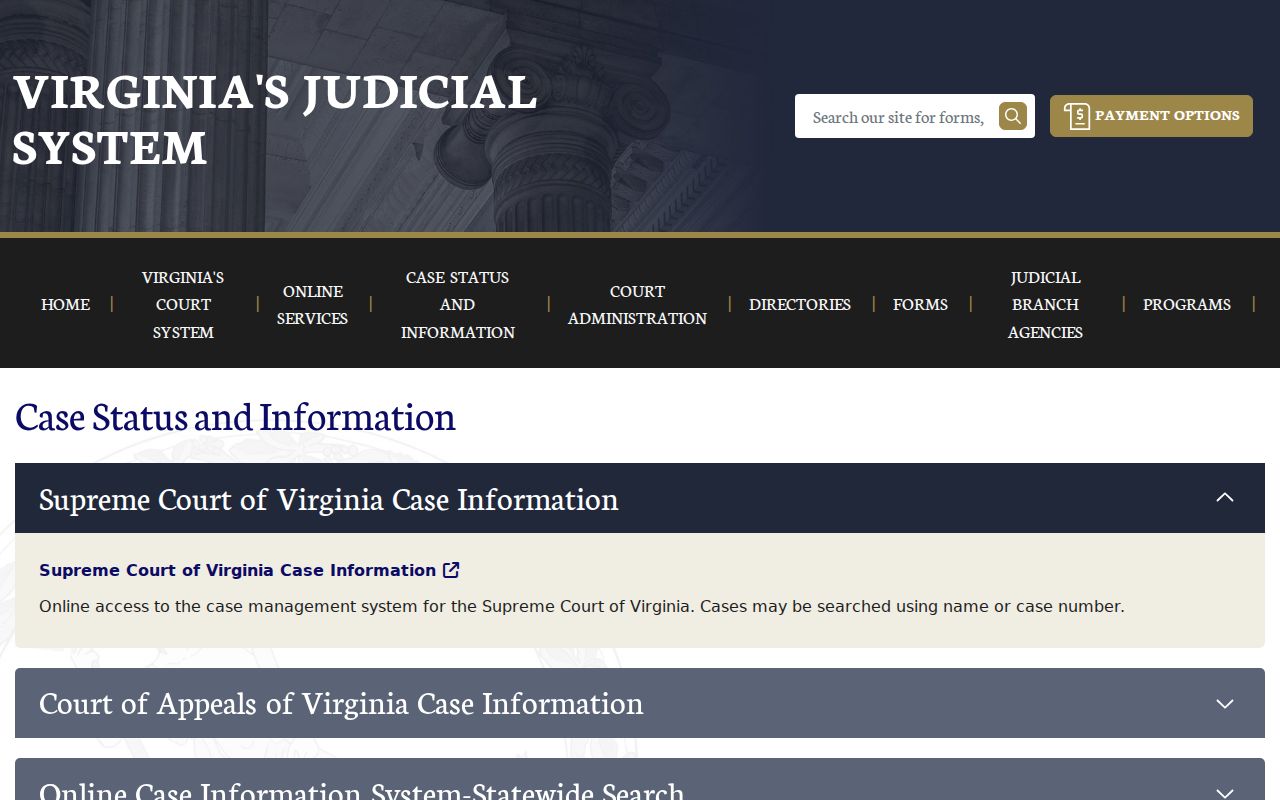
Use that route only after identifying the likely court and record type. It is a locator for official court information, not proof that every same-name result belongs to one Chantilly resident.
Fields Behind a Chantilly Court Lookup
The eCaseSearch form makes its limits visible before a search is run. Choose Civil or Criminal, then choose either party name or case number. A party-name search requires at least the first two letters of the last or company name; first name is an optional narrowing field. Case-number searching uses the form’s displayed examples rather than an inferred format.
| eCaseSearch field | Entry rule |
|---|---|
| Case Type | Required radio choice: Civil or Criminal |
| Search By | Required radio choice: Party Name or Case Number |
| Case Number | Required when selected; examples include CL-2024-0000000 and FE-2024-000 |
| Last Name/Company Name | Required for party search; enter at least two letters |
| First Name | Optional narrowing field |
| Search | Runs the public index query |
Where the index identifies a file that needs review, use the Circuit Court’s file-review request or the clerk’s copy process. The form gives notice within two business days; review occurs in person, and archived files can take longer to retrieve. Court records use the court’s own route, not a countywide records request.
| Index result item | Why to capture it |
|---|---|
| Case number and filed date | Identifies the clerk file and timing |
| Status and type or subtype | Prevents a procedural entry from being overstated |
| Party name as shown | Helps separate people, companies, and similar names |
| Hearing or docket event | Records what the index actually displays |
| Disposition, if visible | Requires the docket context before any conclusion |
Note: The research captured the form and official schema, not a populated Chantilly docket, so no person-specific court example is assumed.
Verify a Chantilly Resident Carefully
A resident lookup becomes stronger when two independent sources agree on a limited point. First anchor the person to a known geographic clue. Then compare the role and date in a second record. Do not turn a parcel owner, directory subscriber, grantee, or court party into a current resident without evidence that supports that specific conclusion.
- Write down the name exactly as known, including a middle initial, suffix, former name, or alternate spelling. Keep the source and date of the lead.
- Use an address, historical directory, iCare parcel card, MAR result, or My Neighborhood report to anchor the search to a location without assuming a mailing ZIP is the physical site.
- Check a second official record that answers a different question, such as a recorded instrument for a parcel owner or a case number for a court entry.
- Label unresolved results plainly: not located, same-name unresolved, record restricted, or jurisdiction mismatch.
- Stop when the lawful personal, family-history, property, civic, or historical question has been answered.
- Docket
- A court’s dated list of filings, hearings, and events in one case. It is not automatically a final ruling.
- Index and image
- An index helps locate a record. The image or clerk file is the underlying document and may have separate access rules.
- Certified copy
- A copy issued by the custodian with its official certification, used when an ordinary screen result is not enough.
Chantilly Record Roles Differ
A name can recur across a parcel card, deed, directory, court index, and voter-related source while describing different roles. This comparison is a useful safeguard against the same-name trap. It also keeps a search focused on a traceable fact rather than a broad profile of a person.
| Official record | Narrow fact it supports | What it cannot settle alone |
|---|---|---|
| Parcel card | Assessment fields and owner or mailing value when displayed | Current occupancy or complete household membership |
| Recorded deed | A conveyance between named parties on a recorded date | Who is currently present at the property |
| Directory entry | A dated listing or subscriber clue | A complete or current household |
| Court index | A filed case or event as shown | Identity of every same-name party or the meaning of an allegation |
| Voter portal | An individual’s own status or polling task | A public name-to-address roll |
Official custodians identify their jurisdiction, access rules, and correction path. A commercial people-finder category can combine old addresses or unmatched names from unclear sources. Return to the deed, court docket, VDH form, or county parcel record to verify a claim instead of treating an aggregated result as the correction source.
Chantilly Resident Vital Routes
The Virginia Department of Health Office of Vital Records is the custodian for birth, death, marriage, divorce, stillbirth, and related records. It offers online applications, mail, the Richmond counter, drop-off, and local registrar or health-department routes. The correct channel depends on the event and the requester’s eligibility, not on whether the person has a Chantilly connection.
Virginia Code §32.1-271 keeps birth records confidential for 100 years and death, marriage, divorce, and annulment records confidential for 25 years. Before the public period, an applicant generally needs an eligible relationship, legal authority, identification, and a signed form. The inspected 2026 materials list a $15 fee per certificate or search. The current VDH forms page is the right place to confirm the applicable form and processing estimate before applying.
For older events, public indexes can provide a lead, while the Virginia Room and Library of Virginia microfilm may help establish a date or locality. An index is not a certificate image. If the certificate is restricted, record the access gap rather than attempting to infer the missing event from unrelated records.
Chantilly License Records Stay Narrow
State agency tools can help only when the question concerns a public credential, entity role, or official filing. The Virginia DPOR advanced license search accepts license number, name, location or ZIP, board, and license type. Results may show a number, name, dates, classification, status, and address of record, but DPOR cautions that online data may lag and is not the official record.
The Department of Health Professions lookup provides board and license-status context, while the State Corporation Commission Clerk’s Information System covers public business-entity and clerk records. These tools do not create a general private-resident index. They are most useful where a name is already tied to an estate, public credential, or entity document.
The Virginia Department of Corrections locator has a defined custody purpose and its own date-sensitive scope.
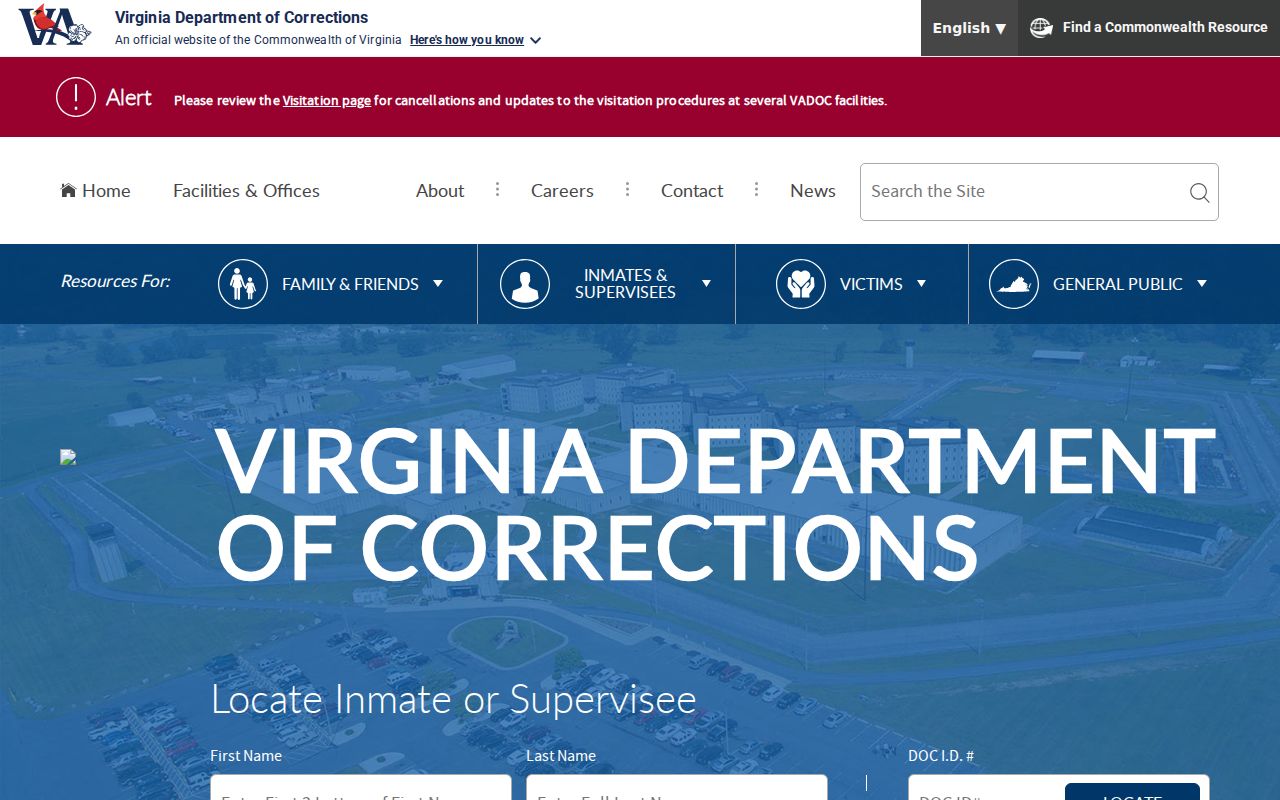
A locator result needs its source date and scope preserved. It cannot be expanded into a claim about unrelated people or a person’s current address.
Chantilly Record Gaps and FOIA
The Virginia Citizen Portal is designed for an individual’s registration-status and polling-place tasks. Virginia Code §§24.2-405 through 24.2-407 restrict voter-list release and do not support a public name-to-address directory. A historical Fairfax street file can help explain an old street-to-precinct relationship, but a current address should be checked through the official portal or county elections office.
The direct Virginia voter-status route is pictured below. Its dynamic fields were not captured during the source inspection, so no unsupported field list is presented.
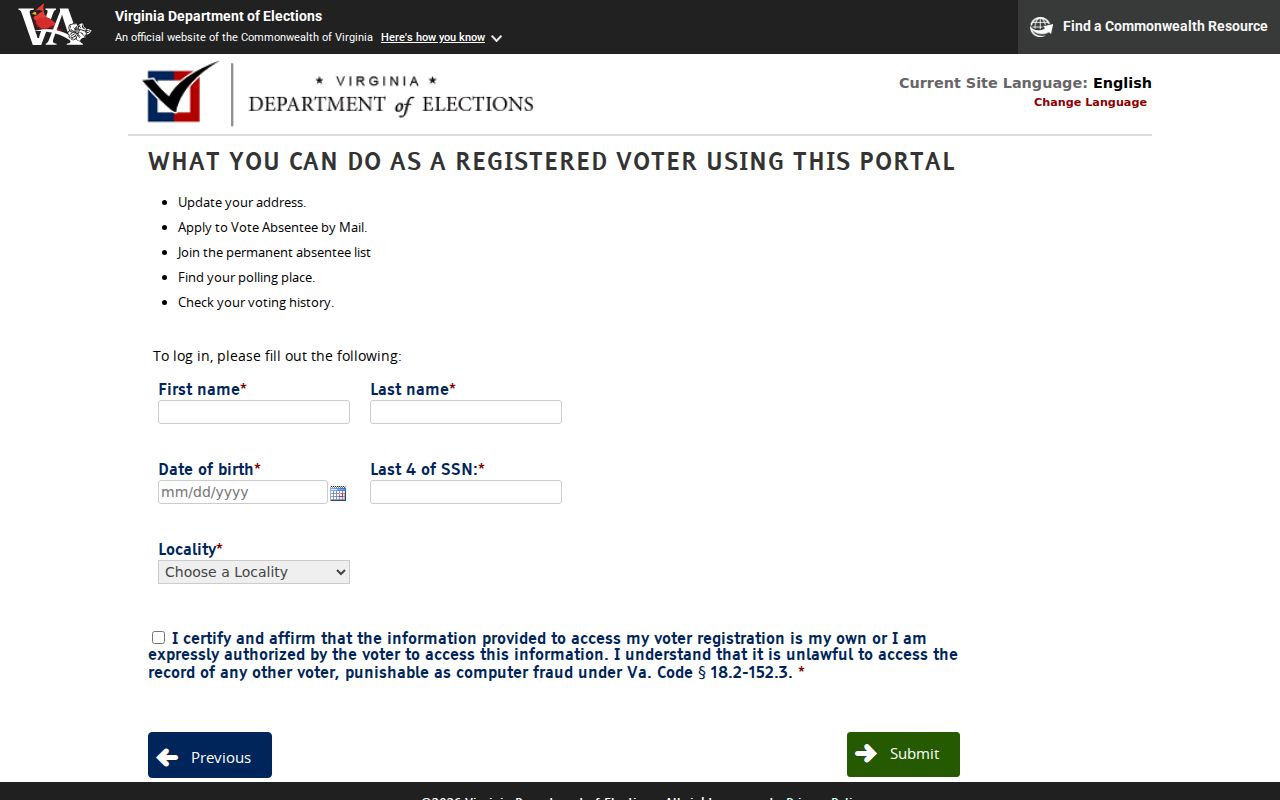
Use the portal for the individual civic task it provides, then retain only the minimum information needed for that purpose.
When a Fairfax agency holds a record but publishes no usable portal, a narrow Fairfax VFOIA request can name the agency, address or parcel, record type, date range, and preferred delivery. Virginia FOIA §2.2-3704 generally requires a response within five working days or notice of additional time, and actual search or copy costs can apply. It does not override voter, vital, court, or confidentiality statutes.
Chantilly Resident Lookup Limits
Fairfax DTA permits an owner-name withholding request for Internet display. MAR omits apartment units. Vital certificates have statutory access periods, and Virginia’s Address Confidentiality Program protects eligible participants through a substitute address and restricted disclosure. Public court and land records still require care: a filed matter or recorded conveyance may be real without identifying a current resident or telling the full story.
The Virginia State Police registry is another official source with a narrow statutory purpose and defined search scope.
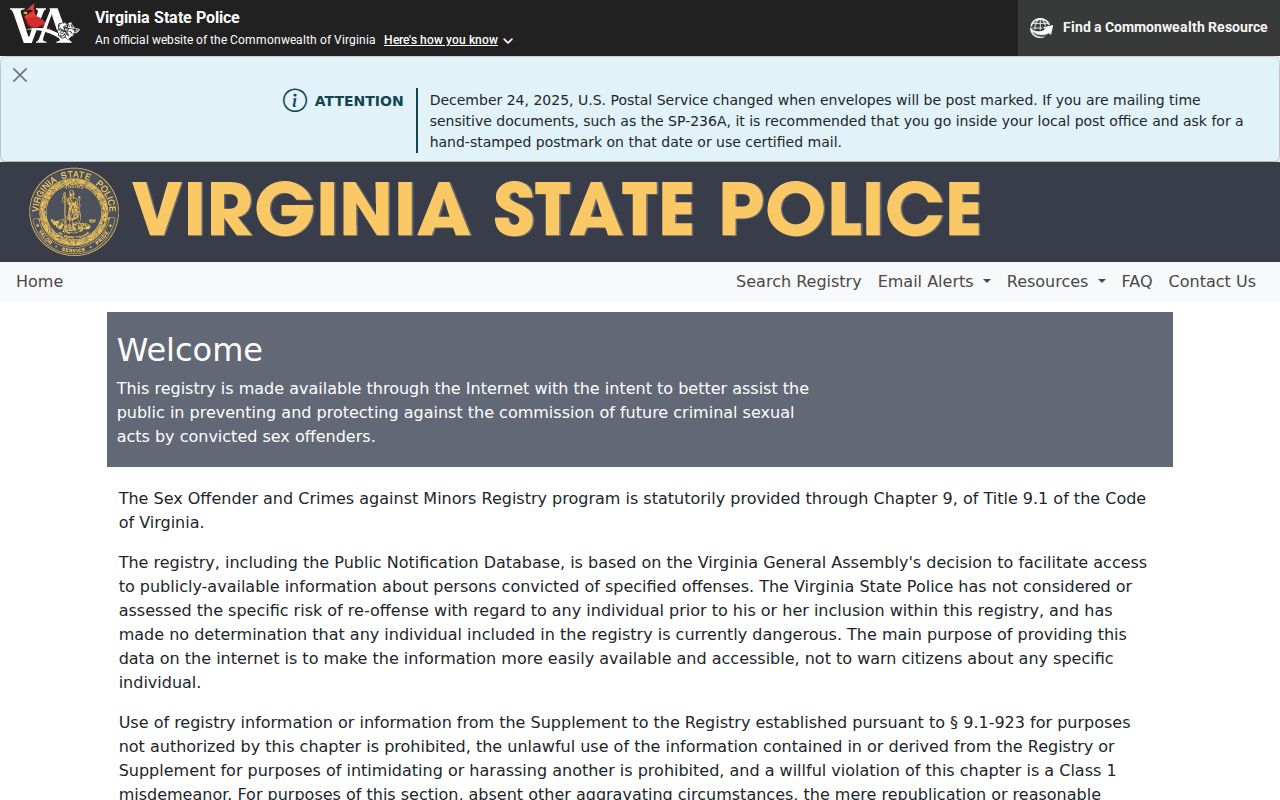
Use a specialized registry only for its stated official purpose, and record the date because status information can change.
Lawful use. Use Chantilly records for a lawful personal, family-history, property, civic, or historical question, then stop when it is answered. Virginia law does not permit stalking, harassment, intimidation, or unwanted contact based on a record.